
Hyperbaric oxygen
How hyperbaric oxygen works
You breathe extra oxygen under pressure. The pressure lets many times more oxygen dissolve into your blood, and more of it reaches your tissues than usual.
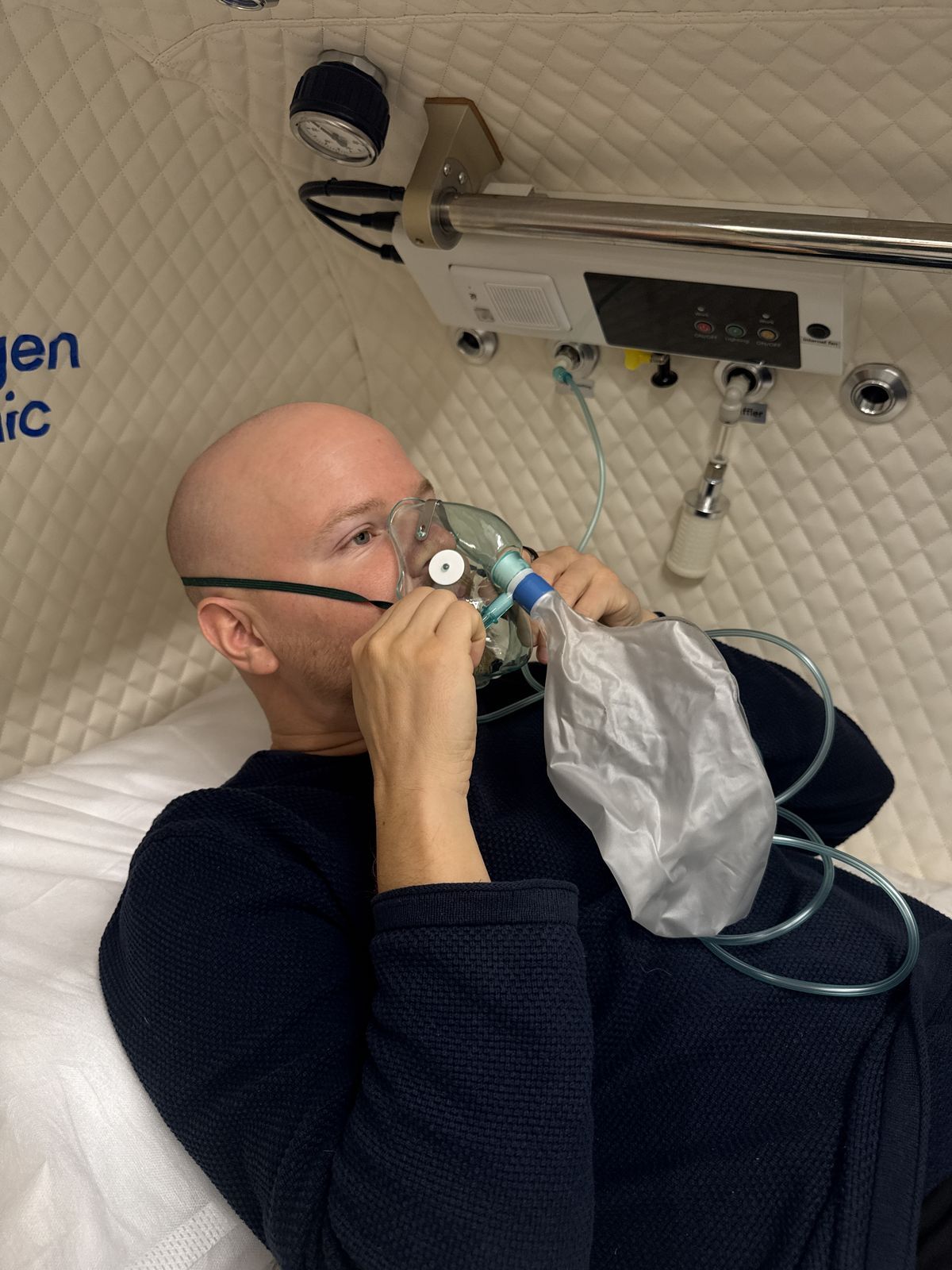
What happens in your body
Normally we breathe air that contains about 21% oxygen. Red blood cells carry oxygen to the tissues, and they are usually almost full already.
In a hyperbaric session, you breathe extra oxygen, and the pressure in the chamber is raised to 1.3–1.5 atmospheres (1.3–1.5 ATA). The oxygen concentrator produces about 95% oxygen, and the oxygen level of the air you breathe depends on whether you use a mask or a nasal cannula. Thanks to the pressure, oxygen dissolves not only into red blood cells but directly into the blood plasma. This way more oxygen reaches your tissues than is possible under normal conditions.
Every cell in your body needs oxygen to work and to repair itself. That's why we talk about an oxygen boost to support recovery.
A session step by step
A session is 60 or 90 minutes. The pressure build-up is part of the session time; bringing the pressure down comes on top of it.
- You arrive at the clinicCome about 10 minutes early. On your first visit, we go through what happens in the session and make sure it's right for you.
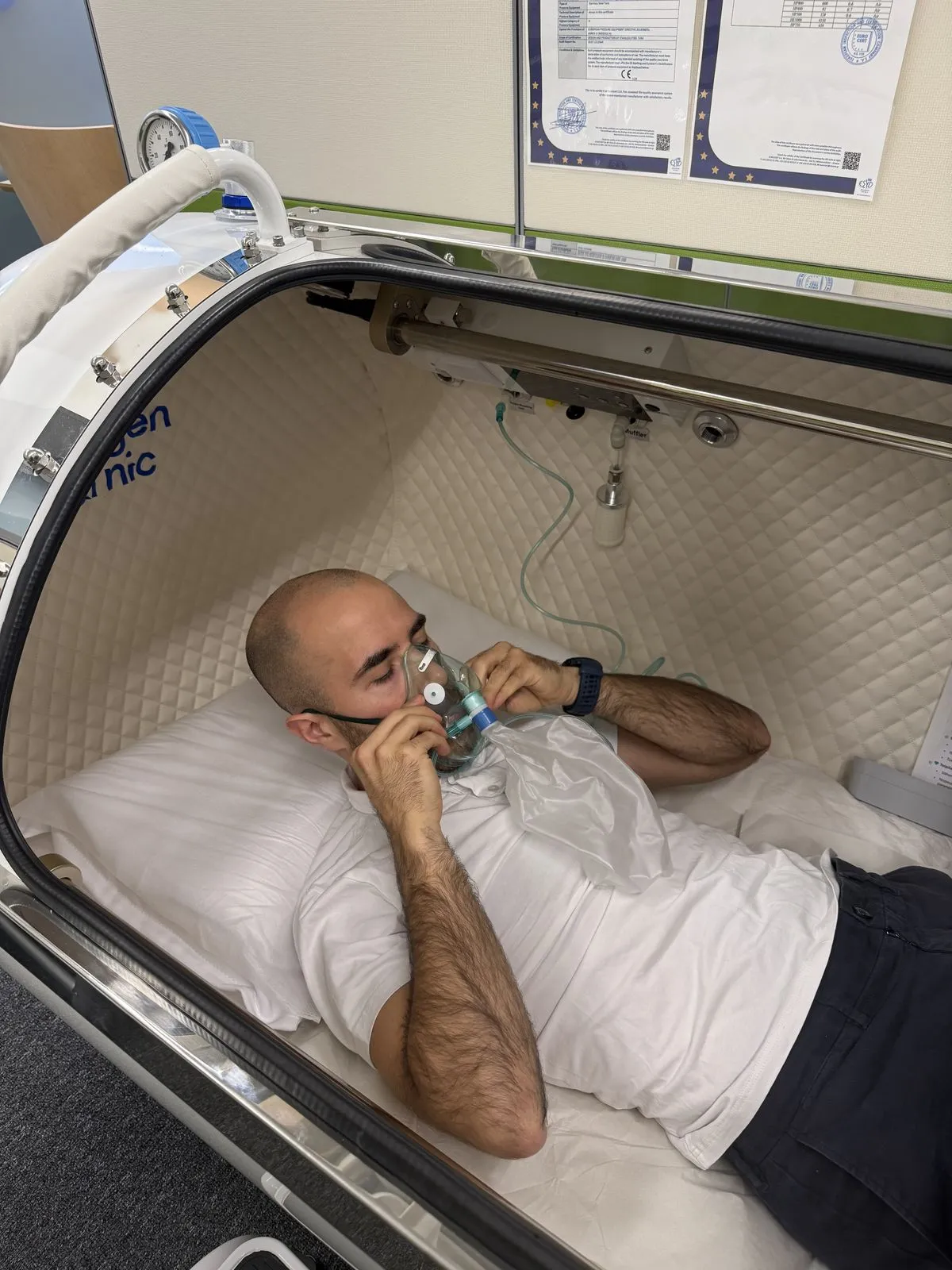
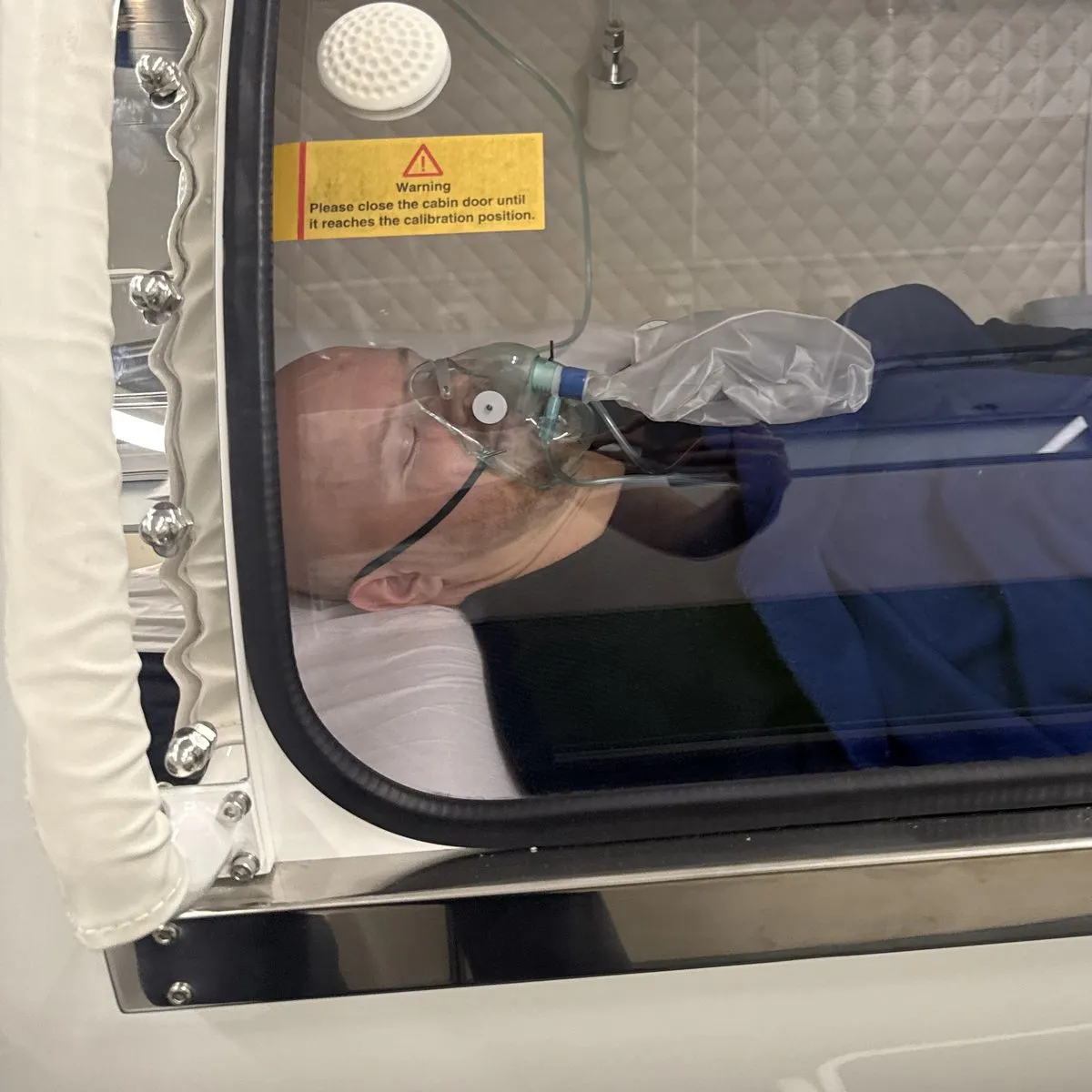
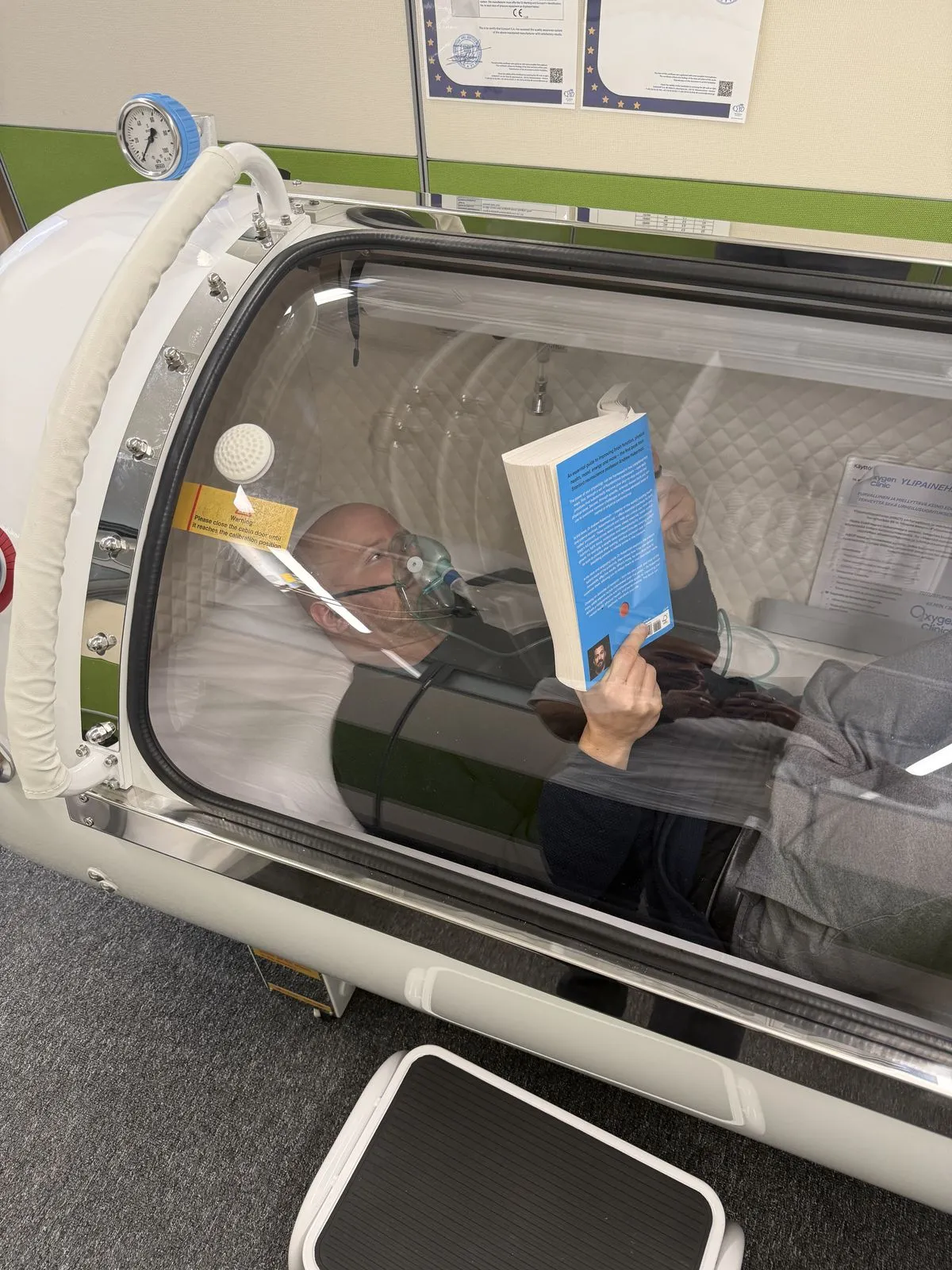
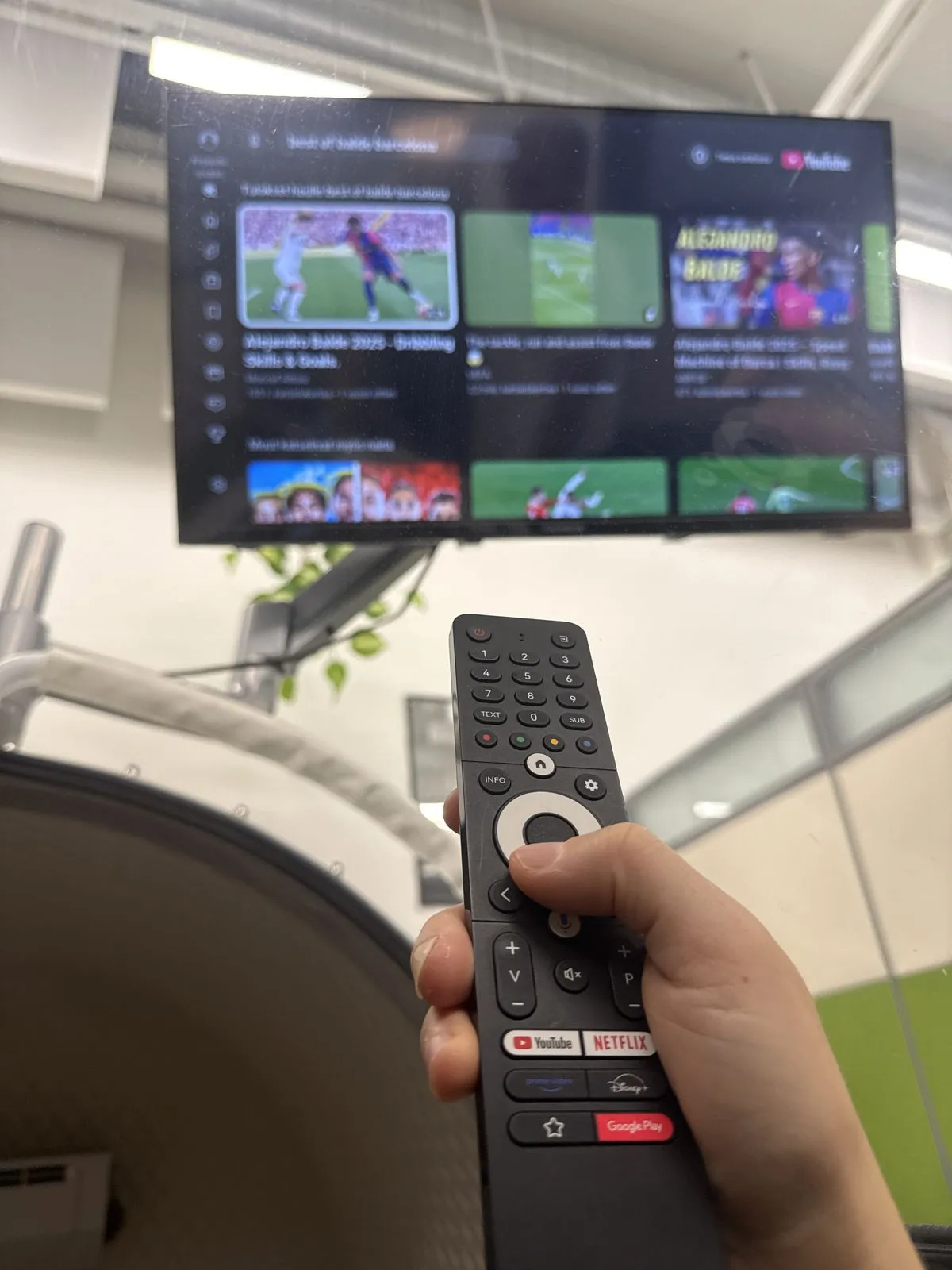
- You settle into the chamberYou lie down comfortably and put on the oxygen mask or nasal cannula. You can bring a book, watch shows on the screen or take a nap.
- Pressure goes up, about 10 minYou feel pressure in your ears, like on a plane or when diving. You can even it out by swallowing, yawning, moving your jaw or blowing gently with your nose pinched. If needed, we raise the pressure more slowly. This time is part of the session.
- You rest and breatheUntil the end of the session time, 60 or 90 minutes. The chamber has cooling and ventilation, so it doesn't get hot or stuffy. Many people take a nap.
- Pressure comes down, about 3–5 minOn top of the session time. If your ears are sensitive, we lower the pressure more slowly. Once the pressure is back to normal, our staff opens the door.
Our chambers
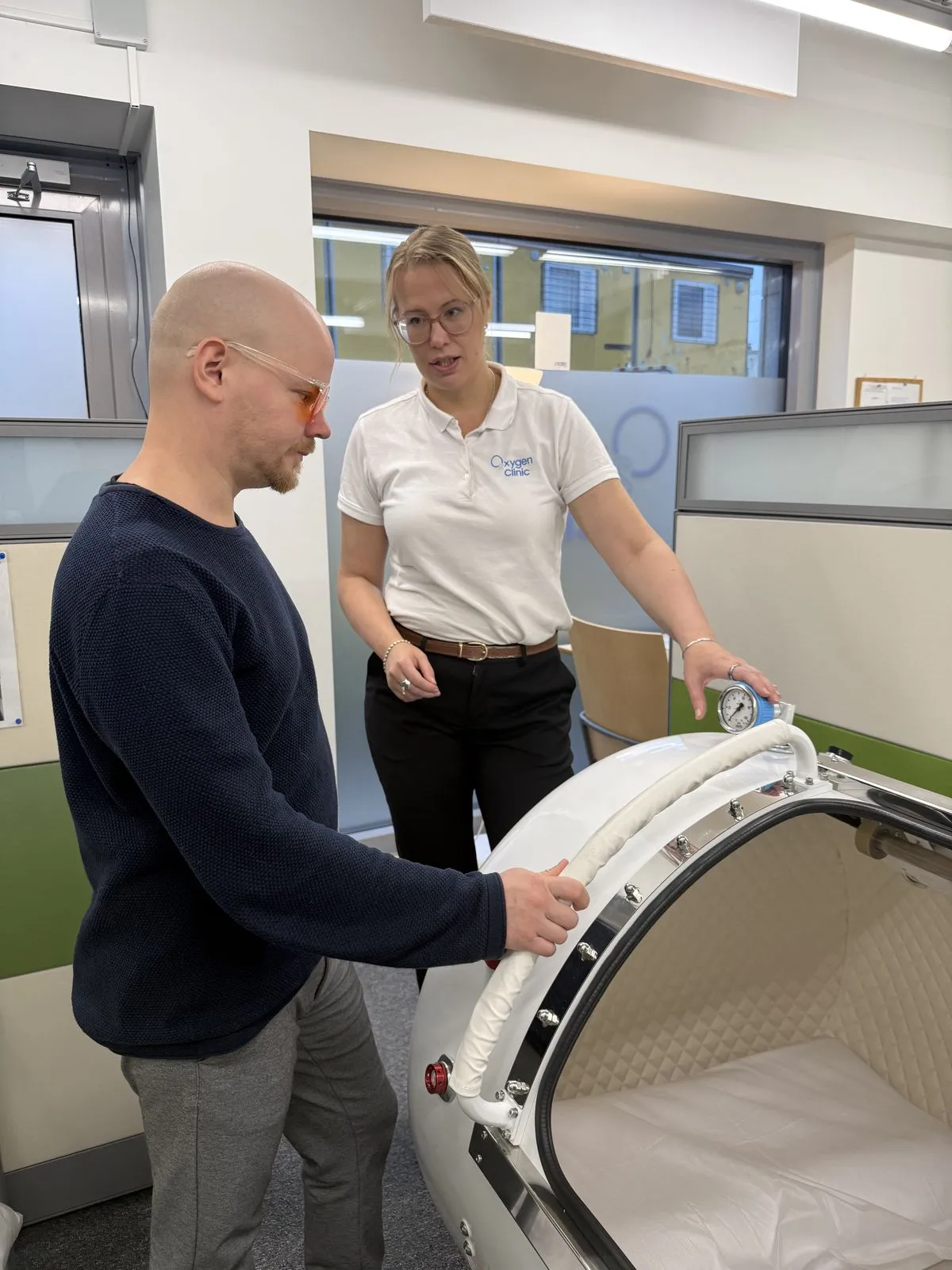
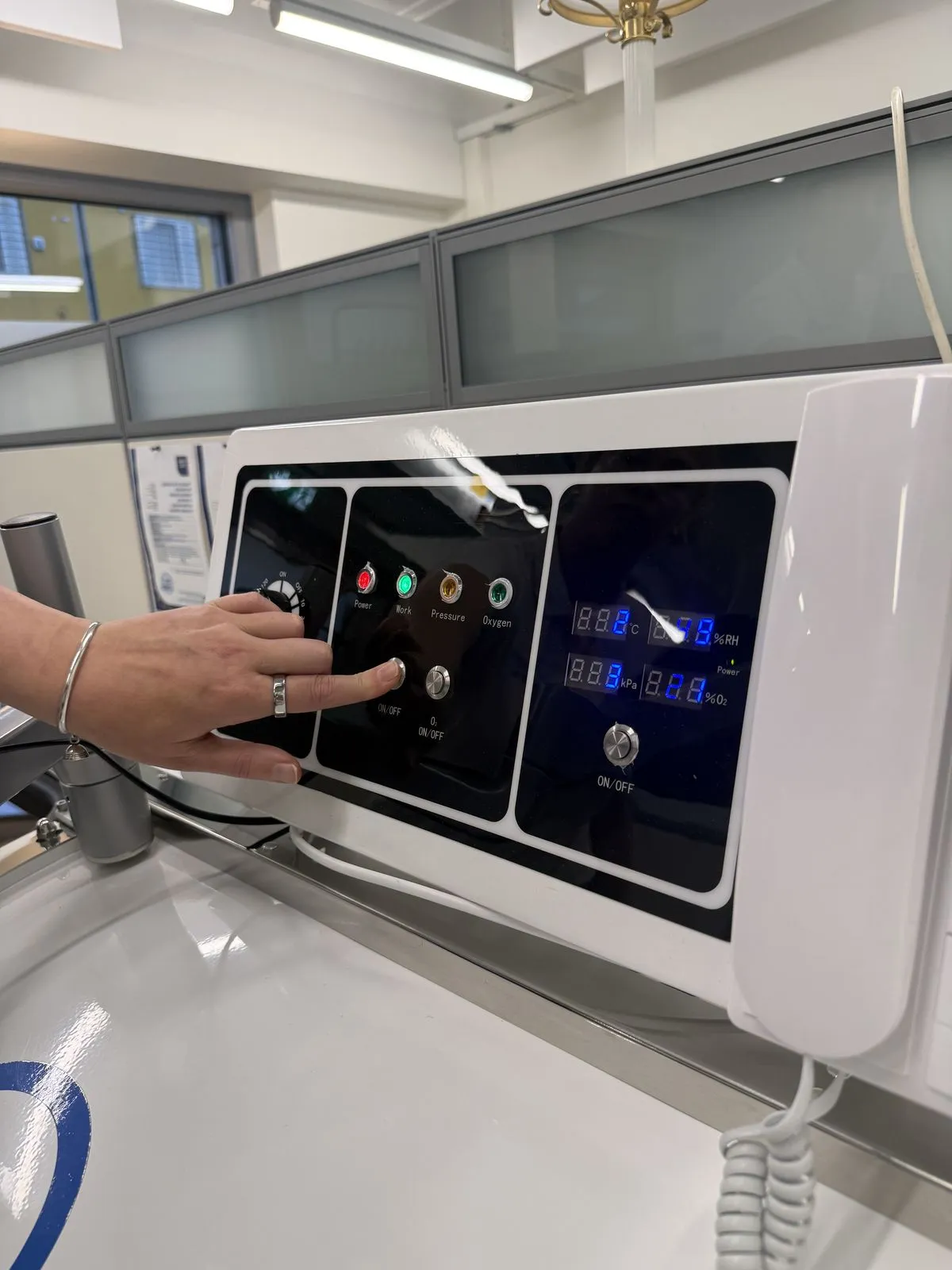
We have three chambers, each in its own booth. The pressure in our chambers can be adjusted between 1.3 and 1.5 atmospheres (1.3–1.5 ATA). Each chamber has cooling, ventilation and a phone to reach our staff. You can take a nap, read a book or watch shows on the screen through the chamber window.
Safety
We use a low pressure of at most 1.5 atmospheres and short sessions. Under these conditions the sessions are very well tolerated. The most common sensation is pressure in the ears. It usually evens out by swallowing or yawning, and if needed we raise the pressure more slowly.
Our staff are always present, and you can call us from inside the chamber by pressing a button. If your ears hurt or you want to get out, tell us and we lower the pressure straight away.
The chamber isn't filled with extra oxygen. You breathe the extra oxygen through an oxygen mask or nasal cannula, and a constant flow of air runs through the chamber for the whole session, replacing the air inside. This keeps the oxygen level of the air in the chamber low and safe.
We use our equipment to support wellbeing, not for medical purposes. We do not diagnose or treat any illness, and hyperbaric oxygen does not replace treatment prescribed by a doctor.
When we don't recommend it
If any of the following applies to you, we don't recommend hyperbaric oxygen. If you're unsure, talk to your doctor first or give us a call.
- Pacemaker
- High blood pressure (over 160/100 mmHg)
- Pneumothorax or emphysema
- COPD or severe asthma
- Panic disorder or claustrophobia
- A cold, middle ear infection or acute sinusitis
- Difficulty equalising pressure in your ears
- Pregnancy
- Drinking alcohol before the session
Before your session
- Skip strong perfumes on the day of your session.
- Don't drink alcohol before the session.
- Wear comfortable clothes.
Frequently asked questions
Do you serve customers in English?
Yes. We explain everything in English, and you're welcome to ask as many questions as you like. The online booking calendar shows the service names in Finnish. Choose “Tutustumiskäynti” for your first visit.
How often should I come?
For most people, changes show over several weeks, once a few sessions are behind them. That's why we recommend the recovery period, where you come in regularly for four weeks.
How long does a visit take?
The session is 60 or 90 minutes, and the pressure build-up (about 10 minutes) is part of it. Bringing the pressure down takes about 3–5 minutes on top of the session time, or longer if your ears are sensitive. If you arrive 10 minutes early, a 60-minute session takes about 1 h 15 min in all.
60 or 90 minutes?
We recommend 90 minutes if it fits your schedule. The time it takes to arrive and get ready is then spread over a longer session. 60 minutes is a good option when your schedule is tight. It also suits you if your body reacts strongly to the sessions and you prefer a gentler session.
How much does it cost?
An intro visit is €36, the recovery period €660 and a single session €90. See all prices.
How do I pay?
You pay by invoice, which we email to you. Monthly memberships are billed every four weeks (28 days).
What can I bring into the chamber?
You can bring a book or a magazine. You can watch shows on the screen through the chamber window, and the remote is yours to use. We'll tell you on site what else can come into the chamber.
What should I wear?
Comfortable, loose clothes. You keep your clothes on during the session. Skip strong perfumes on the day of your session.
Can I eat or drink?
Before the session you can eat and drink as usual. During the session there is no eating or drinking in the chamber. It's best not to drink alcohol before the session.
How soon can I come again?
Even the next day. In the recovery period you come about three times a week, and in the Biohacker membership up to five times a week.
Can under-18s come?
Yes, with a guardian's consent. A small child is in the chamber with an adult who makes sure the child is doing fine.
What does it feel like the first time?
The pressure rises calmly, and you feel pressure in your ears like on a plane. After that you can read a book, watch shows on the screen or sleep.
Can it feel cramped?
The chamber has a window, and you can see outside the whole time. Many customers tell us the chamber feels roomier inside than it looks in photos or from the outside. If you have claustrophobia, we don't recommend the sessions.
What's the difference between a mask and a nasal cannula?
With both, you breathe extra oxygen. With a reservoir bag mask, the oxygen content of the air you breathe is higher and more even, and there's no flow of oxygen blowing into your nostrils.
Didn't find your answer? Email [email protected] or call +358 10 579 4848.